

To an outsider, a glove is a glove. To a hurler or a Gaelic footballer, they are completely different tools. Retailers and club shops that treat the two as one category tend to end up with confused customers, wrong-size returns and gaps on the shelf. This guide explains how hurling gloves and Gaelic gloves differ, why those differences matter and how buyers can plan separate ranges that make sense for their customers.
The Short Answer
A hurling glove is built for a player holding a hurley. A Gaelic glove is built for a player catching, holding and passing a football. The sports have different demands on the hands, and the gloves are designed around those demands. That is why we make and list them as two separate product lines, and why we recommend that clubs, schools and retailers do the same.
What a Hurling Glove Has to Do
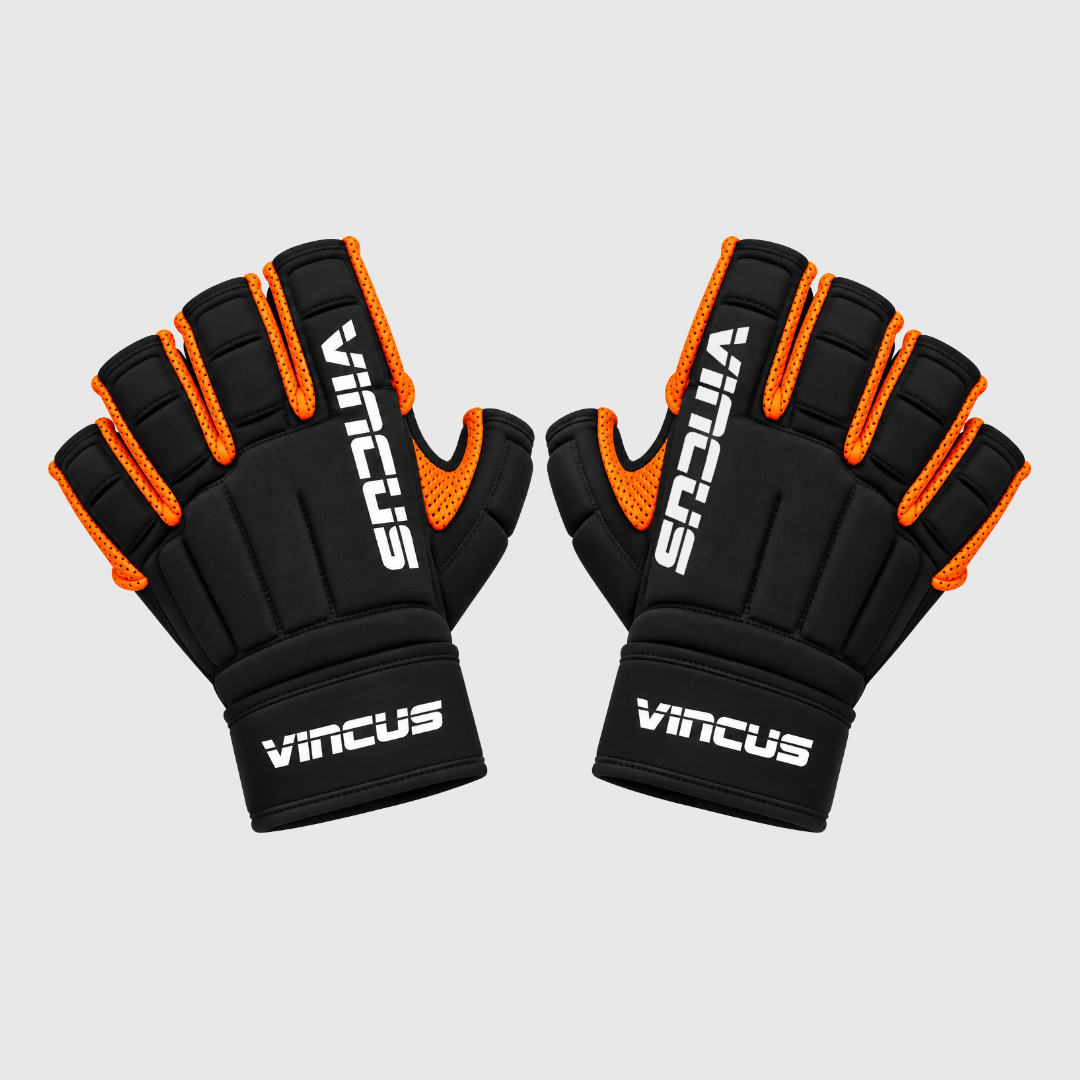
Hurling is fast and physical. The hand on the hurley is exposed to contact from the sliotar, from other players’ hurleys and from awkward clashes in a crowded challenge. Irish retailers’ guides describe hurling gloves in consistent terms: padding on the back of the hand and fingers to absorb knocks, and a grip palm that helps the player keep hold of the handle in wet or cold conditions.
Our hurling gloves follow that approach. They have a padded back to absorb knocks from hurleys and sliotars, a grip palm that keeps the hurley secure through swings and hooks, a flexible fit so players can move freely and a secure wrist closure that keeps the glove in place. We make sizes for adult and youth players, and each pair can be made in your colours with your crest or logo.
It is also worth knowing how players wear them. Many hurlers wear a glove on one hand only, commonly the hand that sits higher on the hurley, while others wear a pair, especially in cold weather. Retailers who want to serve both habits should talk to their customers about how they buy, and to their manufacturer about how pairs and single gloves are packed and labelled.
What a Gaelic Glove Has to Do

Gaelic football is a catching and passing game. Players need a secure hold on a wet ball, feel for a kick pass and freedom to move the fingers. Gloves for the game are therefore built around grip and handling rather than impact padding.
Our Gaelic gloves are built on that principle:
- Latex palm for grip on the ball. The standard option is our New Basic latex, and a contact latex option is available for buyers who want a thicker palm.
- Optional embossed palm for buyers who want a textured grip surface.
- Lycra back, which can be sublimated with any design or logo, so a club can match its colours or a brand can carry its own artwork.
- Velcro wrist to keep the glove secure through the match.
For more detail on those options, see our guide to custom Gaelic gloves.
Side-by-Side Comparison
| Feature | Hurling glove | Gaelic glove |
|---|---|---|
| Main purpose | Protect the hand holding the hurley and keep grip on the handle | Grip and handle the football |
| Back of the hand | Padded to absorb knocks | Lycra, which can be sublimated with any design or logo |
| Palm | Grip palm for the hurley | Latex palm for ball grip |
| Closure | Secure wrist closure | Velcro wrist |
| Typical customer | Hurlers, from juveniles to seniors | Gaelic footballers, from juveniles to seniors |
The table shows why the two cannot be swapped without a compromise. A glove with a thin, stretchy back suits catching but leaves the hand exposed to a hurley. A padded glove built for a hurley handle is not designed around the feel of a football.
Why Retailers and Clubs Should Keep Them Separate
Clearer Product Pages
Customers search for the exact item they need. A parent looking for a pair of gloves for a child who has started hurling will type “hurling gloves”, and a footballer’s family will type “Gaelic gloves”. Separate product pages, separate photographs and separate names help each customer find the right product and reduce the chance of wrong orders.
Cleaner Stock Control
Different products need different sizing runs, colours and reorder points. A club that plays both codes may need a different mix of sizes for each sport, and a retailer may find that one sells faster in winter while the other peaks around the football season. Keeping product codes separate makes those patterns easier to see. Our hurling gloves buyer’s guide covers the planning for hurling gloves, while the Gaelic gloves range is planned on its own sizing run.
Honest Marketing
Using accurate photographs is a simple but important step. A picture of a Gaelic glove on a hurling listing, or the other way round, will lose trust with experienced players quickly. Photograph each product on its own and describe what it is built to do.
Planning an Order for Both Codes
Many clubs run hurling and Gaelic football side by side, and many retailers serve both. If that is you, a sensible approach looks like this:
- Count players by code. Do not assume the numbers are equal.
- Plan sizes separately. Juvenile and adult runs will differ for each product.
- Brief branding separately. Send artwork and colour references for each product rather than assuming one design suits both.
- Order samples of both before you commit to a bulk run.
- Combine shipments where possible. Ordering both together, along with custom hurling gloves for your club and other kit, can keep logistics simple.
Ordering From Vincus Sports
Vincus Sports is a manufacturer and exporter based in Sialkot, Pakistan. We make hurling gloves, Gaelic gloves, sliotars, Gaelic footballs and club teamwear for clubs, schools, retailers and brands in Ireland, the UK, the USA, Europe and Australia. Samples are available on request, and we ship worldwide with tracking.
If you would like a quote for hurling gloves, Gaelic gloves or both, email qasim@vincussports.com or use our contact page with your quantities, sizes, colours and artwork.
Leave a Reply